
Hilo Volcano Helicopter & Ground Tour

Best Big Island Lava Adventure

Embark on an unforgettable 9-hour combo tour from Hilo, exploring the Big Island’s volcanic wonders! Experience a thrilling helicopter ride over Kilauea’s active landscape, then dive into hands-on exploration of lava tubes, crater vistas, and lava fields. Priced at $799.99, it’s a unique opportunity to walk on land once molten.

Activity Price

799.99 USD

Duration

9 Hours

Age

All Ages

Location

Honolulu

Amenities

Expert volcanic geology guides lead the ground portion of the tour, and these aren't just people reading from a script — they know Hawaii Volcanoes National Park the way a fisherman knows his reef. They'll point out the difference between pahoehoe and a'a lava at your feet, explain why certain areas are roped off for safety, and share the kind of detail about Pele's ongoing work on this island that no visitor center exhibit can match.
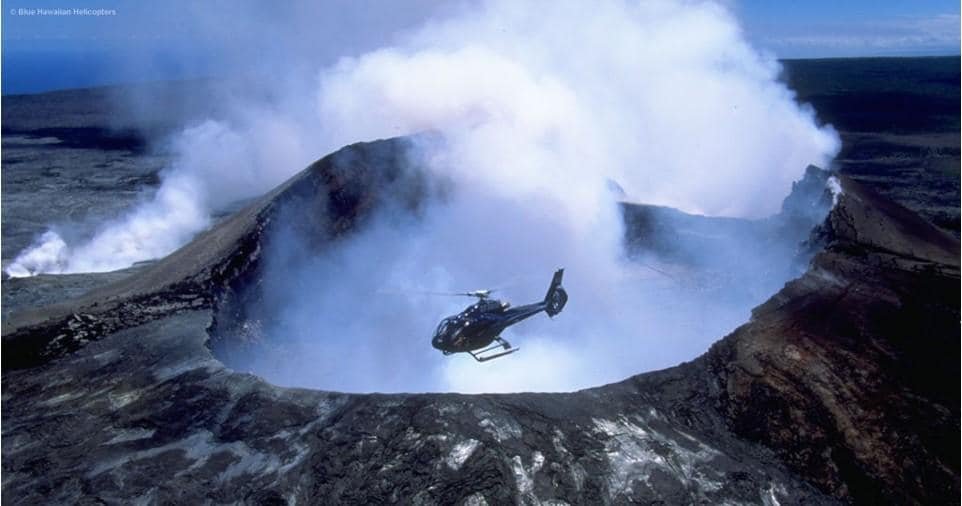
The helicopter flight itself provides aerial views of Kilauea's caldera, active vent areas, and — depending on current volcanic activity — glowing lava channels or ocean entries that are simply impossible to reach on foot. Pilots are FAA-certified and experienced flying over active volcanic zones, and they'll position the aircraft so every passenger gets clear sightlines down into the crater — no craning over someone else's shoulder.

Special Instruction

Lava From Above, Then Under Your Boots

Kilauea Caldera From 1,500 Feet

Banked over the caldera, you’re looking straight down into Halema’uma’u Crater — the steam vents look like scattered breath, the lava lake below is this deep, molten orange that doesn’t look real until you feel the warmth pressing against the helicopter window. Nothing in a photo prepares you for the scale of it, the way the crater walls drop hundreds of feet and the whole floor moves like something alive.

Inside a Lava Tube on the Ground

Ducking into a lava tube is a completely different world — the air drops ten degrees instantly, it’s dark and damp and eerily quiet after the rotor noise and wind outside. Your guide lights up formations that took decades to develop: lava stalactites, glassy tube walls that still catch the light like obsidian, and the hollow silence of a tunnel carved by a river of molten rock that’s long since drained away.

The Lava Field Stretches to the Ocean

Standing on hardened pahoehoe lava at the edge of a flow field, the scale hits you differently than from the air — the black rock runs all the way to the horizon, buckled and ropy and sharp underfoot, swallowing everything that used to be there. Your guide points out where roads and neighborhoods disappeared under flows from years past, and there’s this strange quiet that comes over the group when that registers. Somewhere far out over the water, a thin white plume rises where older lava still meets the sea, and the sulfur smell drifts back on the wind just enough to remind you none of this is finished.

Complete Volcano Exploration

About
Pricing

Explore the Earth’s Most Active Volcanoes!
Embark on an unforgettable journey to one of the world’s most geologically active regions, where eruptions have been ongoing since 1983!

Tour Duration

  • 9 Hours of Adventure

Helicopter Tour Highlights
This thrilling helicopter tour focuses on the latest volcanic activity. Experience stunning views of flowing lava, lush tropical rainforests, and breathtaking waterfalls. Learn about Hawaii’s rich history and culture as you fly over key landmarks, including the Hilo town area, the University of Hawaii, Volcanoes National Park, the southern region of Hilo, and Hilo Harbor.

Ground Tour Highlights
If time allows, the ground tour will bring you up close to many of these incredible locations, giving you the opportunity to experience them in even greater detail.

Tour Rates

  • General Admission: $799.99

  • Infant (2 years old): $349.99

  • Lap Child (Ages 1 and Under): Free

Hilo Volcano Helicopter & Ground Tour — FAQs

  • Whether you’ll see active surface lava depends entirely on Kilauea’s current activity level, which changes without warning — sometimes there are glowing lava lakes and surface flows, other times the activity is more subdued with primarily steam and gas emissions. The helicopter flight will always cover the active volcanic zone, and your pilot will route over the most active visible areas on the day of your flight. The operator monitors conditions daily and will let you know at check-in what’s currently happening — Kilauea has been one of the world’s most continuously active volcanoes for decades, so there’s almost always something dramatic to see even during quieter periods.

  • Helicopter tours on the Big Island typically enforce a weight limit of around 250–300 lbs per passenger, though the exact limit depends on the specific aircraft being used for this tour. You’ll need to provide accurate passenger weights at the time of booking — this is used to balance the aircraft, not to screen passengers, and the operator handles this information professionally. If you’re close to the limit or have concerns, call the operator directly before booking so they can confirm which aircraft is assigned to this tour and what the specific threshold is.

  • Plan on a few miles of walking over uneven volcanic terrain — lava fields, crater rim trails, and lava tube entrances are not paved paths, and the footing requires attention. It’s not technically difficult hiking, but it’s not a gentle stroll either; people with mobility limitations or significant knee and ankle issues should ask the operator what accommodations are available before booking. Sturdy closed-toe shoes are mandatory — sandals and flip-flops will get you turned away at the start of the ground portion.

  • A standard volcano helicopter tour on the Big Island runs 45–60 minutes in the air and drops you back at the helipad — this tour is a full 9 hours that combines flight time with guided ground exploration inside Hawaii Volcanoes National Park. You’re paying for two distinct experiences: the aerial perspective that only a helicopter can give you, and the ground-level detail that only expert guides walking you through lava tubes and crater overlooks can provide. For most people who do both separately, the combined cost would be similar or higher, and the guided expertise on the ground adds context that transforms what you’re seeing from ‘cool rocks’ into a genuinely coherent picture of how the island is still being built.

  • Wear closed-toe shoes with thick, protective soles — hiking boots are ideal, but sturdy athletic shoes work if they have solid uppers. Dress in layers because you’ll start near sea level in Hilo’s warm, humid climate and end up on a crater rim at roughly 4,000 feet where temperatures can be 15–20 degrees cooler with real wind. Bring a light rain jacket (it’s the wet side of the island), sunscreen, water, and a snack since this is a 9-hour day — and leave large bags and loose items behind for the helicopter portion, as storage space in the aircraft is very limited.

  • The tour is listed as all ages, and yes, kids who are comfortable in helicopters and can handle a few hours of walking on rough terrain tend to absolutely love it — seeing lava up close and crawling into a lava tube is the kind of thing kids talk about for years. That said, be realistic about your keiki’s stamina; a 9-hour day with significant walking on uneven volcanic rock is a lot for young children, and if someone melts down at hour six, there’s not an easy exit. Toddlers and very young children may find the helicopter noise and equipment (headsets, harnesses) overwhelming, so use your judgment based on how your child handles new sensory environments.